
WhatsApp vs Messenger: Best for Estate Agents 2026
WhatsApp vs Messenger: Which Should Estate Agents Choose in 2026?
In 2026, international real estate is driven by speed, trust, and always-on communication. For estate agents working with overseas buyers, the choice of messaging app is not a minor tech preference—it directly shapes lead response times, viewing bookings, and ultimately, completed transactions. Two platforms dominate day-to-day conversations: WhatsApp and Facebook Messenger. Both are owned by Meta, both are powerful, and both are evolving fast. The question is simple: for international real estate work, which one should you prioritize?
WhatsApp leads in global adoption, privacy, and business-grade automation—especially for cross-border buyers.
Messenger excels inside the Facebook and Instagram ecosystem, particularly for social ad leads.
Both support AI chatbots, lead qualification, and CRM integrations, but WhatsApp’s Business tools are now more mature.
International buyers typically expect WhatsApp as the default channel—especially in Europe, Latin America, the Middle East, and Asia.
For most estate agents in 2026, the optimal strategy is WhatsApp as the primary channel, with Messenger as a powerful secondary source for social leads.
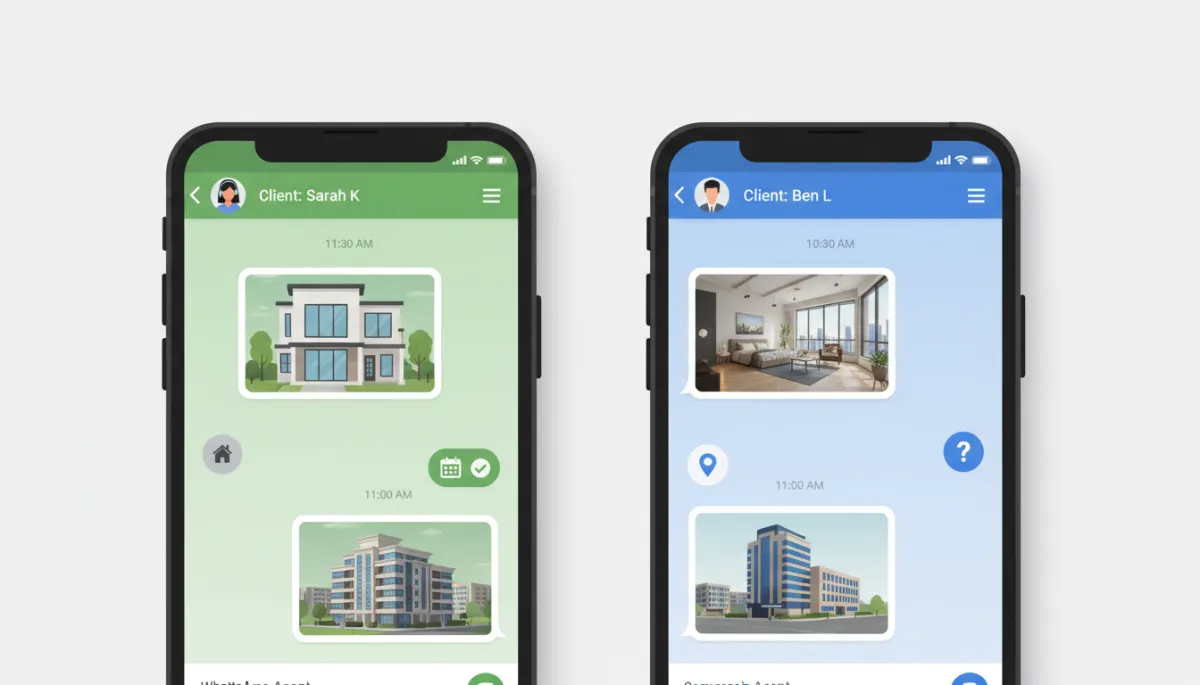
Global user base and market reach
Both apps are massive, but their strengths vary by region and buyer profile.
WhatsApp has become the default messaging channel across much of the world. It dominates in Europe, Latin America, the Middle East, India, and large parts of Africa. Many international buyers—from Dubai investors to Brazilian families to German professionals—use WhatsApp as their primary communication tool for work and personal life. For them, sharing property videos, voice notes, and contract PDFs on WhatsApp feels natural and secure.
Messenger, by contrast, is deeply embedded in the Meta social ecosystem. It is strong in North America, the UK, and some Western markets where Facebook usage remains high. Buyers who first discover you via Facebook Marketplace, Facebook groups, or Instagram ads often message you through Messenger automatically, because that is where the ad click leads them.
For an estate agent targeting international buyers, this split matters. If your core buyers are from WhatsApp-first regions—Spain, Portugal, Italy, France, Germany, the UAE, India, or Latin America—ignoring WhatsApp is not an option. If you depend heavily on Facebook and Instagram ads for lead generation, Messenger is unavoidable, but often as a first touch rather than the long-term communication hub.
Open rates, responsiveness, and client expectations
Messaging apps outperform email and phone calls for speed and engagement, but there are nuances between WhatsApp and Messenger.
WhatsApp conversations tend to feel more personal, immediate, and high-intent. Buyers often reserve WhatsApp for people and businesses they trust. As a result, open rates for WhatsApp messages are typically very high, and replies come quickly—especially when you use short, clear messages, voice notes, and visual content such as floor plans and quick walk-through videos.
Messenger messages also see strong engagement, particularly right after a buyer interacts with your Facebook or Instagram content. However, Messenger inboxes are more cluttered with promotions, page notifications, and social chat. Some users mute Messenger or check it less frequently than WhatsApp. For international buyers in WhatsApp-centric regions, a Messenger thread often becomes a temporary bridge before they ask, “Can we move this to WhatsApp?”
In practice, this means that for sustained, deal-focused communication—sharing offers, negotiating, and coordinating inspections—WhatsApp usually delivers more reliable engagement. Messenger works well at the top of the funnel; WhatsApp tends to win from qualification through to closing.
Automation and AI capabilities in 2026
WhatsApp Business and AI assistants
WhatsApp has made major strides for business users by 2026. The WhatsApp Business app and Business API now support AI-powered assistants capable of handling FAQs, qualifying leads, booking sessions, and summarizing conversations. Meta’s AI can suggest smart replies, clean up photos, and help agents manage conversations more efficiently.
For estate agents, this translates into practical workflows such as:
Instant replies to portal or ad leads—asking budget, preferred location, and move-in timeline.
Automatic sharing of relevant listings based on simple rules or AI-based matching.
Scheduling viewing slots and adding them to your calendar without manual back-and-forth.
Daily summaries of active buyers and pending follow-ups, synced to your CRM.
Automation platforms like Manychat, Wati, and Landbot integrate tightly with WhatsApp, allowing you to design structured flows for qualification, viewing booking, and nurturing. This is especially valuable if you are managing dozens or hundreds of international inquiries per week across time zones.
Messenger chatbots and automations
Messenger has long supported chatbots, especially for Facebook pages. For real estate, this means you can greet visitors from Facebook ads or Marketplace listings, answer basic questions, and route serious leads to an agent. Messenger bots can share property carousels, collect contact details, and offer quick actions like “Book a viewing” or “Request brochure.”
By 2026, Messenger also benefits from Meta’s AI stack—smarter suggested responses, improved translation, and better lead routing. However, the automation ecosystem for Messenger is more focused on social engagement and ad funnels, while WhatsApp’s is increasingly tuned to ongoing, high-value client conversations.
Real estate–specific use cases
How estate agents use WhatsApp in 2026
WhatsApp has become a complete communication backbone for many agencies. Common real estate use cases include:
Speed-to-lead—immediate WhatsApp replies to portal inquiries, website forms, or QR codes on property signs.
Listing alerts—sending new properties or price reductions directly to segmented buyer lists who have opted in.
Virtual tours and media—sharing short walk-through videos, 3D tour links, and annotated photos directly in chat.
Document exchange—sending reservation forms, ID checks, and proof-of-funds requests securely.
Long-term nurturing—keeping in touch with overseas buyers months before they visit, building trust through consistent, low-friction updates.
Because WhatsApp feels like a personal channel, it supports the type of relationship-building that international buyers need when they are making high-value decisions from another country.
How estate agents use Messenger in 2026
Messenger shines at the moment of discovery—when a buyer first encounters your brand on social platforms. Typical use cases include:
Lead capture from Facebook and Instagram ads—click-to-message campaigns that start a conversation instantly.
Marketplace inquiries—handling questions about rental listings or entry-level properties directly inside Messenger.
Group and community engagement—responding to messages from Facebook groups or page followers.
Top-of-funnel automation—using bots to answer FAQs, send brochures, or qualify social leads before handover.
In many agencies, the ideal flow is: attract via Facebook or Instagram, capture on Messenger, then transition serious prospects to WhatsApp for deeper, ongoing communication.
International buyer preferences and multilingual communication
For cross-border clients, convenience and familiarity drive channel choice. In most WhatsApp-first markets, buyers expect you to be available on WhatsApp. They are used to sharing documents, photos, and voice notes there, and they trust the platform’s end-to-end encryption.
Messenger is more common for early, low-commitment questions—especially when a buyer is browsing casually on Facebook or Instagram. However, when discussions become serious, many international buyers request a move to WhatsApp. They may already manage work, family, and financial conversations there, and they want all key information in one place.
Both platforms benefit from Meta’s progress in AI translation, helping agents communicate with clients in different languages. For a deeper strategy on multilingual communication and reaching international buyers in their language, it is worth designing playbooks that combine human agents with AI translation and prewritten templates.
CRM integrations and workflow management

In 2026, both WhatsApp and Messenger can plug into modern real estate CRMs, but the depth and focus of these integrations differ.
WhatsApp-focused CRMs and tools allow you to:
Assign labels to buyers—such as “New,” “Hot,” “Viewing booked,” or “Under offer.”
Sync conversations into your CRM timeline for each contact.
Trigger automated follow-ups based on conversation events, such as no reply after 24 hours.
Share access to shared inboxes across teams, ensuring no lead is missed.
Platforms like Inmowa and others have built dedicated WhatsApp CRMs for real estate, turning chat threads into structured pipelines. Combined with automation tools, this enables consistent, timely follow-up—critical when you are managing overseas buyers across time zones.
Messenger integrations tend to focus more on marketing automation and social funnels. You can capture leads from ads, push them into your CRM, and trigger nurture sequences via email, SMS, or Messenger itself. This is powerful at the awareness and consideration stages, but many agents still prefer to shift serious buyers to WhatsApp once trust is established.
Regardless of platform, your success will depend heavily on process. A strong system for consistent messaging and follow-up in real estate matters more than any single feature. The best agents combine automation with disciplined, human-led relationship building.
Privacy, security, and professionalism
WhatsApp offers end-to-end encryption by default for all one-to-one and group chats. This has become a key trust factor, especially for high-value property transactions and sensitive financial discussions. Buyers feel more comfortable sending ID documents, proof-of-funds, and legal questions when they know the channel is encrypted end to end.
Messenger offers optional end-to-end encryption (via secret conversations and expanded privacy modes), but standard chats are not always encrypted in the same way. For many everyday interactions, this is acceptable, but for international buyers who are highly privacy-conscious, WhatsApp often feels safer.
From a professionalism standpoint, both apps can be used effectively—if you separate personal and business accounts, use clear profile photos, and maintain structured messaging habits. WhatsApp’s support for dual accounts on a single device makes it easier to keep your business identity distinct from personal chats.
Pros and cons for estate agents
WhatsApp: advantages and limitations
Pros:
Global dominance in key international buyer markets.
High open rates and fast, personal-feeling responses.
Strong privacy with default end-to-end encryption.
Mature business tools, AI assistants, and CRM integrations.
Excellent for ongoing, deal-focused communication and nurturing.
Cons:
Requires explicit opt-in for bulk or broadcast messaging via Business API.
Some learning curve around templates, automation tools, and compliance.
Less native connection to Facebook and Instagram ad flows compared with Messenger.
Messenger: advantages and limitations
Pros:
Seamless integration with Facebook and Instagram ads, pages, and Marketplace.
Effective for capturing and qualifying social leads at the top of the funnel.
Supports chatbots, quick replies, and rich media experiences.
Familiar to many buyers in North America and Western markets.
Cons:
Weaker adoption in many international buyer hotspots compared with WhatsApp.
Inbox noise from social notifications can reduce responsiveness.
Perceived as less private than WhatsApp for sensitive discussions.
Less commonly used as the primary channel for long, complex transactions.
Clear verdict: which should estate agents choose in 2026?
For estate agents working with international buyers, the verdict is clear but nuanced.
WhatsApp should be your primary messaging channel for serious buyer communication, follow-up, and deal management in 2026. Its global reach, encryption, and business-focused automation tools make it the strongest foundation for cross-border real estate relationships.
Messenger should remain a strategic secondary channel—especially for capturing leads from Facebook and Instagram, handling quick questions, and running ad-driven funnels. However, once a buyer is qualified and engaged, you will usually benefit from moving them to WhatsApp for more structured, trusted communication.
A practical approach is to design a simple, repeatable workflow:
Attract and capture via Facebook and Instagram using Messenger.
Qualify quickly with a Messenger bot or scripted questions.
Invite serious buyers to continue on WhatsApp for secure, ongoing updates.
Use WhatsApp Business, AI assistants, and CRM integrations to manage follow-up, viewings, and negotiations.
To go deeper on channel-specific tactics, explore a dedicated resource such as the full guide to WhatsApp for real estate agents, and then layer Messenger into your social lead strategy.
FAQ: WhatsApp vs Messenger for estate agents in 2026
1. Should I give buyers both my WhatsApp and Messenger details?
Yes, but prioritize clarity. On your website, portals, and email signature, highlight WhatsApp as your main channel for international buyers, and mention Messenger primarily in social contexts. This reduces confusion and keeps serious deal conversations in one place.
2. Is WhatsApp compliant for sending bulk property alerts?
Yes—if you use the WhatsApp Business API correctly and obtain explicit opt-ins. You must follow Meta’s policies on template messages and consent. Many real estate–focused platforms handle this for you, so you can send targeted alerts without breaching regulations or overwhelming buyers.
3. When does Messenger outperform WhatsApp for real estate?
Messenger is strongest at the top of the funnel—when prospects are browsing on Facebook, Instagram, or Marketplace and want quick, lightweight interactions. If your marketing relies heavily on social ads and content, Messenger will capture more initial inquiries than WhatsApp.
4. How do I manage both apps without missing leads?
Use a CRM or messaging hub that integrates with both WhatsApp and Messenger. Route all conversations into a single dashboard, assign owners, set reminders, and track stages. Combine automation with a clear follow-up process so every lead receives timely, relevant responses, regardless of entry channel.
5. What is the single most important factor in choosing between them?
Your target buyer profile. If most of your international clients come from WhatsApp-first regions, invest deeply in WhatsApp Business, automation, and CRM integration. If your pipeline is built mainly from Facebook and Instagram campaigns, Messenger will remain essential—though you will still benefit from moving serious buyers to WhatsApp as relationships progress.


