
WhatsApp: Top Channel for Property Buyers 2026
WhatsApp: The Number One Channel for International Property Buyers in 2026
In 2026, international buyers no longer want to chase emails, download attachments, or wait days for replies. They expect instant, mobile-first conversations, rich media, and clear next steps—delivered in the apps they already use every day. For cross-border real estate, that channel is WhatsApp.
Across Europe, the Middle East, and Latin America, WhatsApp has moved from “nice-to-have” to the default communication layer between serious buyers and high-performing agents. If your international sales strategy is still email-first, you are competing with agents who are already living inside your buyers’ WhatsApp inboxes—and winning.
Why WhatsApp dominates international property buyers in 2026
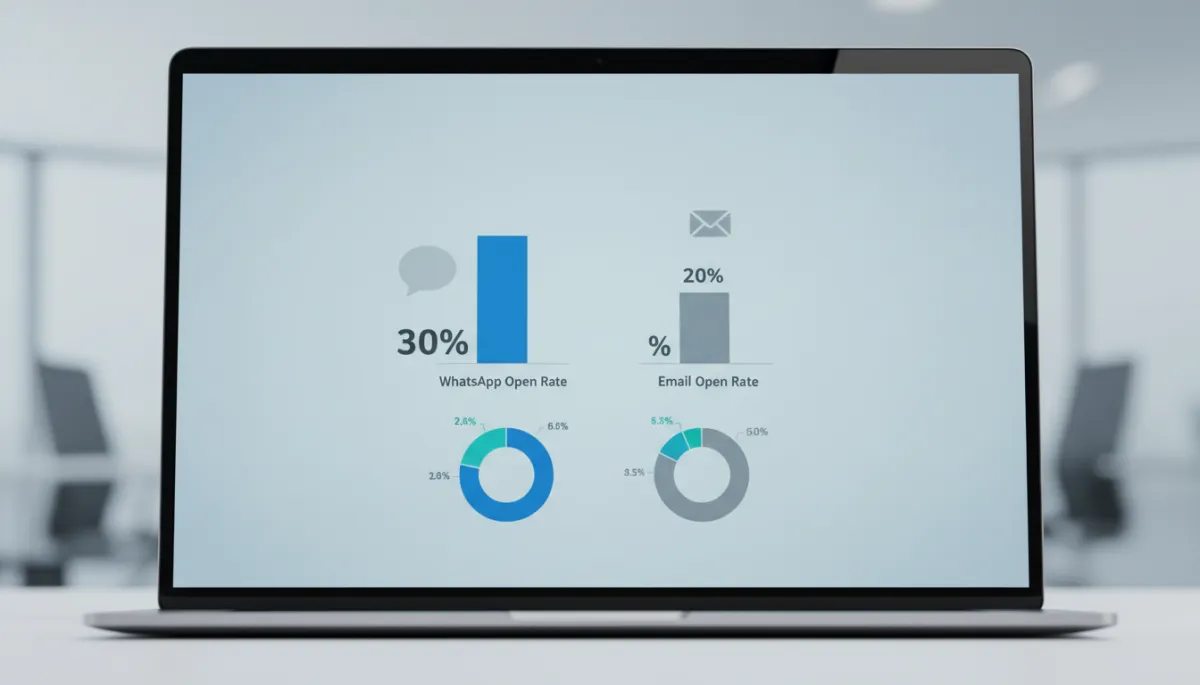
WhatsApp open rates sit around 95–98%, while email averages only 18–25%.
Buyers across Europe, the Middle East, and Latin America prefer WhatsApp for speed, privacy, and convenience.
WhatsApp Business features—catalogs, quick replies, labels, and AI agents—streamline the full sales cycle.
Automation and multilingual messaging turn one agent into a 24/7, global-ready team.
A WhatsApp-first buyer journey converts more leads, reduces “ghosting,” and keeps every conversation in one persistent thread.
Why WhatsApp is the undisputed #1 channel for international buyers in 2026
Three structural shifts explain why WhatsApp has become the dominant channel for international property buyers.
1. Buyers live on mobile messaging, not in their inbox
International buyers coordinate travel, banking, and family decisions via messaging apps. When they research property abroad, they expect the same experience—fast, informal, and always-on. WhatsApp sits at the center of this behavior, especially in Europe, the Middle East, and Latin America, where it is often the primary communication tool.
Instead of switching to email, downloading PDFs, and searching for past threads, buyers can keep everything in a single WhatsApp chat: links, videos, voice notes, contracts, and reminders. This continuity is invaluable for long, multi-stakeholder decisions like cross-border property purchases.
2. Open rates that email simply cannot match
WhatsApp messages are almost impossible to ignore. They appear in personal chat feeds, trigger push notifications, and show clear delivery and read receipts. Multiple 2025–2026 benchmark studies report WhatsApp open rates in the 95–98% range, often cited at around 98% for business messaging. Email, by contrast, typically delivers only 18–25% opens, with many campaigns hovering around 20–21%.
In practical terms, for every 100 messages you send, around 95–98 WhatsApp messages will be opened. The same 100 messages sent by email will likely result in only 18–25 opens—and even fewer meaningful replies. In a market where response time and follow-up quality directly affect conversion, that gap is decisive.
Infographic on a laptop screen comparing WhatsApp and email open rates side by side, subtle...
3. A better fit for high-touch, high-value transactions
Cross-border property deals involve complex questions, documents, and emotions. WhatsApp supports rich media—HD photos, 3D tours, voice notes, PDFs, and location pins—inside a single, persistent thread. Agents can move seamlessly from first contact to property shortlists, viewings, negotiation, and after-sales support without changing channels.
Messaging apps are already transforming real estate communication. Industry analyses note that buyers appreciate secure, instant, real-time conversations, especially when operating across time zones and languages. WhatsApp aligns perfectly with that expectation, making it the natural home for serious international buyers.
Buyer preferences across Europe, the Middle East, and Latin America
While every buyer is unique, clear regional patterns have emerged by 2026.
Europe: Convenience, documentation, and compliance
European buyers—both intra-EU and from the UK—value efficiency and traceability. They tend to use WhatsApp to:
Consolidate information about multiple properties in one thread.
Share listings and videos with partners or family members for joint decisions.
Receive key documents such as brochures, floor plans, and reservation forms before moving to formal e-signing platforms.
They still expect formal contracts via email or dedicated portals, but they want the discovery, shortlisting, and scheduling stages to happen in WhatsApp.
Middle East: Relationship-first, mobile-only engagement
In the Gulf and wider Middle East, WhatsApp is deeply embedded in daily life. Many international buyers from this region prefer:
Direct, personal communication with a named agent on WhatsApp.
Rich media—video walkthroughs, neighborhood footage, and lifestyle content—delivered quickly.
Voice notes for nuanced questions, often outside standard office hours.
Trust is built through responsiveness. Agents who reply within minutes, send personalized videos, and maintain regular check-ins via WhatsApp are far more likely to secure site visits and reservations.
Latin America: Community, recommendations, and ongoing updates
Latin American buyers, whether investing locally or abroad, rely heavily on WhatsApp for family coordination and financial decisions. They often:
Share property links and videos in family or investor group chats.
Expect ongoing status updates—price changes, new phases, or incentives—directly in WhatsApp.
Use the app for both discovery and long-term relationship building, even after a purchase.
For agents, this means that a single WhatsApp conversation can influence not just one buyer, but an entire network of referrals and co-investors.
WhatsApp Business features every international agent should use
WhatsApp Business—via the app or API—has evolved into a powerful toolkit for real estate teams in 2026. Used correctly, it turns your WhatsApp presence into a structured, scalable sales channel.
Professional business profile and branding
A complete business profile builds instant credibility with international buyers. At a minimum, configure:
Business name, logo, and verified phone number.
Short description focused on your international expertise and key markets.
Business hours, website, and key social channels.
When a new buyer lands in your chat from a click-to-WhatsApp ad or a QR code, they immediately see that they are dealing with a professional, not a random personal account.
Catalogs and property “mini-sites” inside chat
Catalogs allow you to showcase selected listings directly within WhatsApp. Each item can include photos, descriptions, and links to full listings. For international buyers, this feels like a curated mini-site inside the chat—faster and more focused than sending long, generic brochures.
You can maintain separate catalogs for different buyer segments: investment apartments, holiday villas, off-plan launches, or commercial units. This makes it easy to send a tailored shortlist in seconds.
Labels, quick replies, and templates
Labels help you organize conversations—“New lead,” “Hot buyer,” “Viewing booked,” “Under offer,” or segmented by country of origin. This structure is essential when you are juggling dozens of international threads.
Quick replies and message templates reduce repetitive typing. You can standardize answers to common questions about visa rules, reservation processes, or payment schedules, while still personalizing intros and recommendations.
AI and automation via Meta Business Agent and API
In 2026, Meta’s Business Agent and WhatsApp Business API providers allow you to automate large parts of the buyer journey:
Instant greeting messages and basic qualification questions.
Property recommendations based on budget, location, and timing.
Viewing booking flows with calendar integration and reminders.
Post-visit follow-up sequences with additional options and nudges.
Agents who embrace automation report a step-change in response times—dropping from hours to seconds—without adding headcount. Human agents then step in for high-value interactions, negotiations, and closing.
Multilingual messaging: meeting buyers in their own language
International buyers expect to communicate in their preferred language—especially for high-stakes decisions like property purchases. WhatsApp is uniquely suited to this requirement.
Agents can maintain different language threads, use in-chat translation tools, or route leads to native-speaking colleagues. Automation can detect language preferences from the first message and trigger appropriate flows. For deeper implementation ideas, many teams now look to specialist guidance on multilingual WhatsApp campaigns or native-language messaging tailored to international buyers.
In practice, multilingual messaging means:
Greeting buyers in their language from the first interaction.
Sending key documents—brochures, FAQs, payment schedules—in translated form.
Using voice notes when written fluency is limited on either side.
This combination of immediacy and linguistic comfort significantly lowers friction and builds trust across borders.
Property sharing via WhatsApp: how buyers actually make decisions
Most international property decisions are not made by a single person on a single device. They are collaborative, iterative, and highly visual. WhatsApp fits this reality perfectly.
Buyers routinely forward your listings, videos, and voice notes to:
Family members in different countries.
Business partners or co-investors.
Trusted advisors such as lawyers or financial planners.
Because WhatsApp preserves full media quality and context, every forwarded message carries your branding, your explanations, and your contact details. A well-structured message—short description, price, key highlights, link, and video—can be the asset that convinces a hesitant spouse or partner.
For agents, this means designing shareable content: concise, visually strong, and easy to understand without additional explanation. Think of each WhatsApp message as a mini-presentation that can travel across multiple decision-makers.
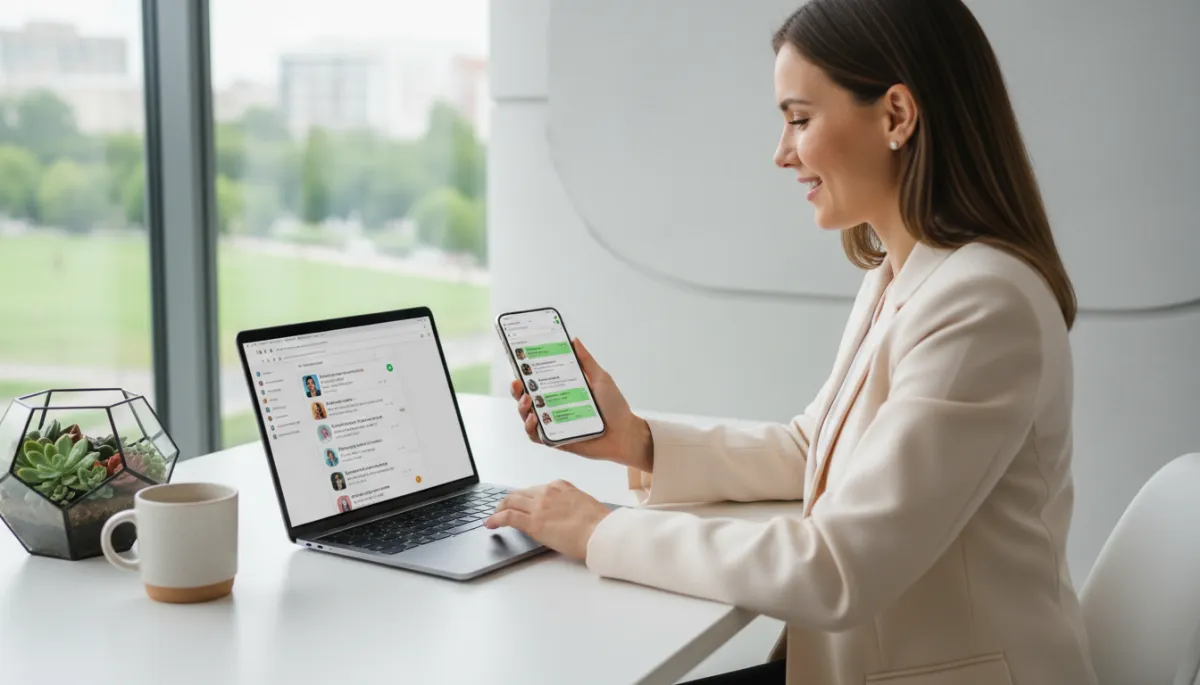
Bright modern workspace with a real estate agent at a desk, laptop open to WhatsApp Web showing...
Building a WhatsApp-first buyer journey for international clients
To unlock the full potential of WhatsApp, you need more than ad hoc chats—you need a deliberate, WhatsApp-first buyer journey that runs from first impression to post-sale nurture.
1. Lead capture: make WhatsApp the primary call to action
Replace or complement traditional “Request info” email forms with click-to-WhatsApp buttons, QR codes on offline materials, and WhatsApp links in portals and social media. The goal is simple: every serious international prospect should be one tap away from a WhatsApp conversation with your team.
Ensure that your first automated response sets expectations—who they are talking to, what happens next, and when they can expect a human reply.
2. Qualification: structured, conversational, and fast
Use a short, friendly question sequence to understand budget, preferred locations, property type, and timeline. Automation can handle this first stage, feeding responses directly into your CRM.
Agents can then review qualified leads with full context and propose a curated shortlist, rather than sending generic links. This is where a complete guide to WhatsApp for real estate agents becomes invaluable for designing flows that feel natural but remain highly efficient.
3. Presentation: rich media and clear next steps
Once you understand the buyer’s profile, present 3–7 properties via WhatsApp with:
Short, scannable descriptions.
Key numbers—price, size, yield, or payment plan—up front.
High-quality photos, video walkthroughs, or neighborhood clips.
Links to detailed pages for deeper research.
End each batch with a simple call to action: “Which two would you like to discuss in more detail?” or “Shall we schedule a virtual tour this week?”
4. Viewings and follow-up: automation with a human face
Use WhatsApp to book and confirm viewings, share live locations, and send reminders. Automation can trigger pre-visit messages (parking instructions, required documents) and post-visit follow-ups (feedback requests, alternative options, or deadline reminders).
To reduce “ghosting,” progressive teams are redesigning their nurture systems into WhatsApp-powered follow-up systems for international buyers that keep conversations warm for weeks or months, without overwhelming the prospect.
5. Negotiation, reservation, and after-sales
Once a buyer is serious, WhatsApp remains the coordination hub for negotiations, document checklists, and milestone updates. Formal agreements may move to e-sign platforms, but all questions, clarifications, and status updates can stay in WhatsApp.
After completion, keep the thread alive for property management, resale opportunities, and referrals. A satisfied international buyer with a positive WhatsApp experience often becomes your most powerful advocate in their network.
Practical steps to make WhatsApp your primary international sales channel
To operationalize a WhatsApp-first approach, focus on five practical pillars:
Policy and compliance: Ensure opt-in for marketing messages, respect Meta’s 24-hour rule for free-form conversations, and use approved templates for outbound campaigns.
Team training: Standardize tone, response times, and escalation paths so every buyer receives a consistent, professional experience.
Integration: Connect WhatsApp to your CRM and listing systems so that no lead, note, or document lives only on a single device.
Automation: Deploy chatbots and AI agents for first response, qualification, and routine updates, freeing human agents for complex cases.
Measurement: Track response times, open rates, viewing conversion, and deal conversion from WhatsApp-originated leads versus other channels.
Teams that execute on these pillars report higher lead-to-visit ratios, shorter sales cycles, and stronger buyer satisfaction scores—especially among cross-border clients who value clarity and speed.
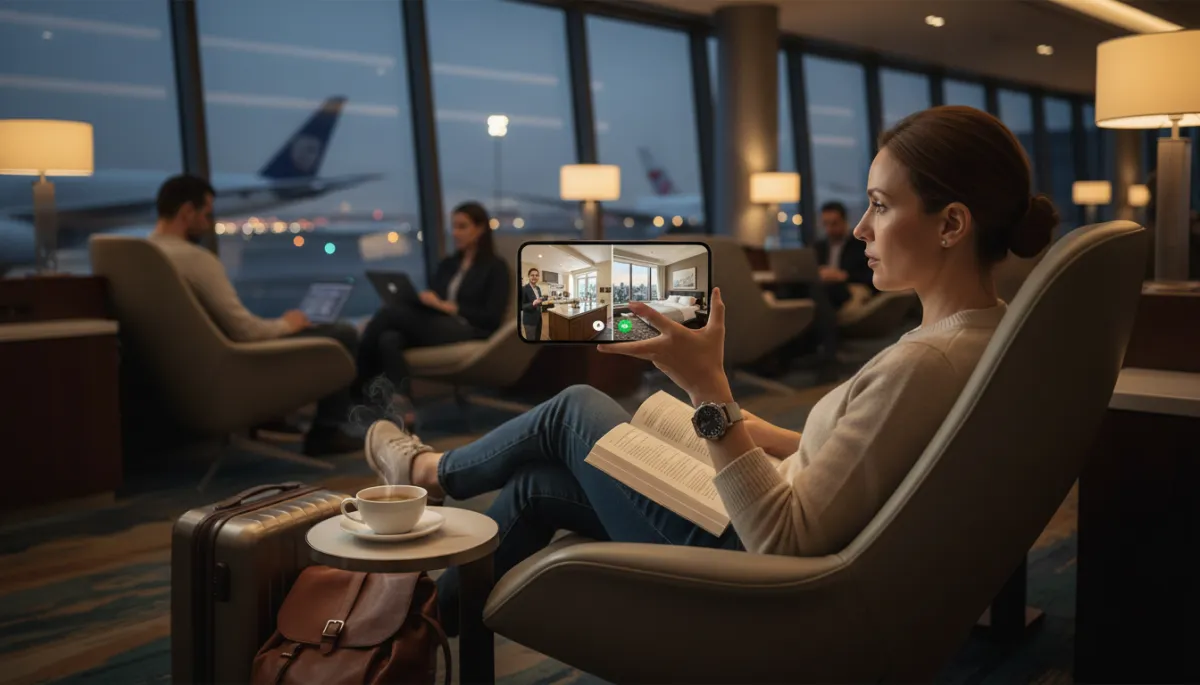
Airport lounge scene with an international traveler seated comfortably, looking at a smartphone...
Frequently asked questions about WhatsApp and international property buyers
1. Is WhatsApp really more effective than email for serious buyers?
Yes. In 2026, WhatsApp open rates consistently reach 95–98%, while email averages only 18–25%. For international real estate, where timing and responsiveness are critical, this difference directly impacts how many leads convert into viewings and offers. WhatsApp also provides read receipts and real-time replies, making it far easier to manage active pipelines.
2. How do I keep WhatsApp professional and compliant?
Use a WhatsApp Business account with a complete profile, clear business hours, and standardized templates for key messages. Obtain explicit opt-in for marketing or broadcast campaigns, and follow Meta’s messaging policies for business-initiated conversations. Keep personal and business numbers separate, and document important decisions in your CRM.
3. What about buyers who still prefer email?
You should always respect buyer preferences. Offer both channels, but default to WhatsApp for speed and engagement, especially during discovery, shortlisting, and scheduling. Many buyers who start on email are happy to switch once they see how convenient WhatsApp is for sharing videos, documents, and quick updates.
4. Do I need automation, or can I manage manually?
Solo agents can start manually, using quick replies, labels, and basic templates. However, as soon as you handle multiple markets or run campaigns at scale, automation becomes essential. AI-powered agents can handle first responses, FAQs, and simple qualification 24/7, while you focus on serious buyers and negotiations.
5. How do I measure the ROI of a WhatsApp-first strategy?
Track metrics such as lead response time, viewing conversion rate, proposal-to-offer ratio, and closed deals from WhatsApp-originated leads. Compare these against email or portal-only leads. Most teams see faster cycles and higher conversion when WhatsApp is the primary channel, especially for international buyers who value immediacy, clarity, and persistent, mobile-first communication.
In 2026, the question is no longer whether international buyers use WhatsApp—it is whether your real estate business is structured to meet them there, with the right systems, content, and workflows to turn conversations into completed transactions.


