

Multilingual Real Estate: The New Standard
Multilingual Isn’t a “Nice to Have” Anymore — It’s the Baseline for International Real Estate Success
International buyers are no longer impressed that you can “get by” in English. In 2026, they expect to research, inquire, negotiate, and receive updates in their own language — across ads, landing pages, WhatsApp, and contracts. For agents, developers, and marketers, multilingual real estate marketing has shifted from competitive advantage to basic operational hygiene.
Why multilingual is now the baseline
Native-language real estate ads routinely deliver 30–40% higher engagement and lower cost per lead than English-only campaigns.
International buyers expect localized listings, messaging, and WhatsApp communication — not just a bilingual brochure.
Dutch, German, French, Arabic, and Russian are now core languages for European cross-border property flows.
Native-language WhatsApp campaigns turn cold clicks into qualified conversations and faster bookings.
You can launch multilingual property marketing without a full translation team by combining AI, playbooks, and specialist partners.
From Differentiator to Default: Why Multilingual Is Now Non-Negotiable
For years, “we speak English” felt sufficient for attracting international buyers. That era is over. Global home-shopping interest is rising again — Realtor.com reports international traffic climbing from 1.2% in Q1 2020 to 1.6% in Q1 2026 — and those buyers now have abundant choice. They gravitate to agents and developers who speak their language, literally and figuratively.
At the same time, platforms such as Housing Market Group and Housing Market Ads have normalized multilingual experiences. Marketplaces, CRMs, and ad tools now support 10+ languages by default. When buyers can browse a competitor’s listings, book a viewing, and receive WhatsApp updates in flawless German or Arabic, your English-only funnel feels outdated and risky.
In this environment, multilingual real estate marketing is not about impressing people with sophistication — it is about clearing the minimum bar of trust. If your ads, landing pages, and follow-up messages are not aligned with a buyer’s native language, they will assume the rest of the process will be equally difficult.
What the Numbers Say: Multilingual Campaigns Convert Better
Industry benchmarks paint a clear picture. Typical real estate campaigns on Google Search convert around 3–4%, while Meta (Facebook and Instagram) averages about 2.15%. Those numbers are for generic, mostly monolingual campaigns.
When you switch to localized, native-language creatives, performance changes dramatically. Studies across verticals — including property — show that ads written in native, culturally tuned copy can generate roughly 34% higher click-through rates and 27% lower cost per acquisition compared with direct, machine-translated versions. Platforms focused on multilingual real estate advertising report the same pattern: better engagement, more time on site, and higher lead quality when the full journey is in the buyer’s language.
Behind those percentages is human psychology. Property is high value and high risk. Buyers want to feel understood, not just targeted. When they see a villa in Spain advertised in Dutch, with a landing page, form, and WhatsApp follow-up also in Dutch, they infer that the agent understands their concerns about schooling, tax, and health insurance — not just the square meters and sea views.
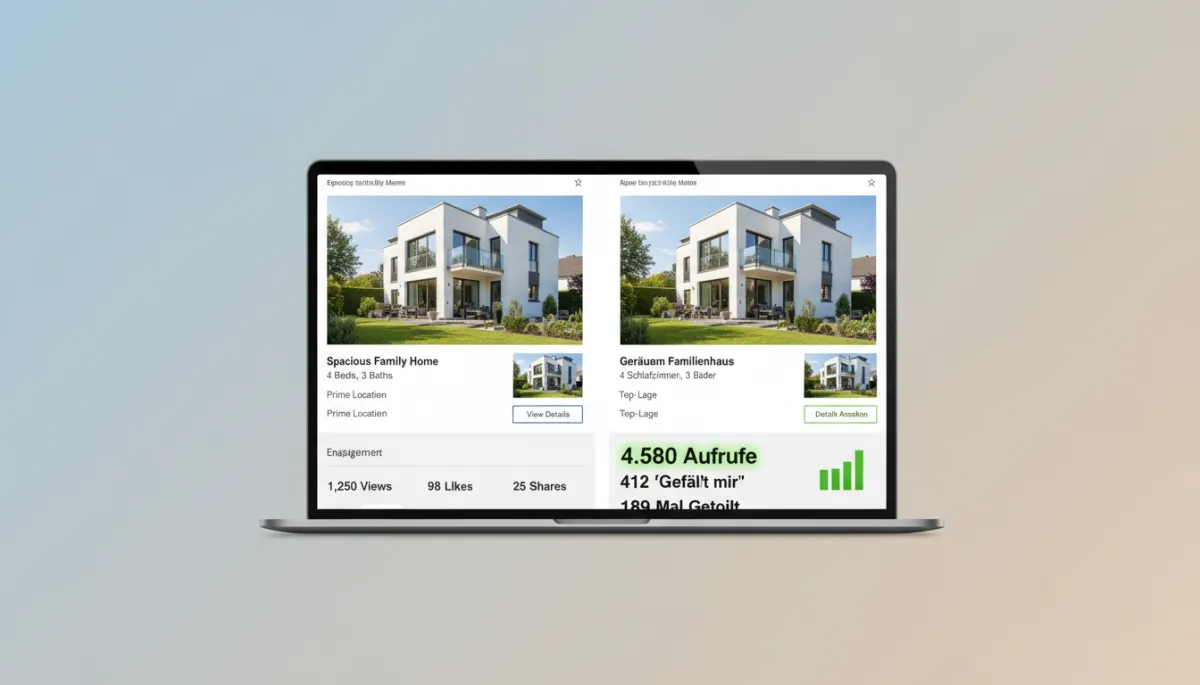
Split-screen layout showing two nearly identical property ads on a laptop screen, one in English...
Buyer Expectations in 2026: Frictionless, Native-Language Journeys
International buyers today benchmark your experience against the best digital products they use — not just against other agencies in your town. They order groceries, book flights, and sign financial documents in their own language with a few taps. That expectation carries over into real estate.
What serious buyers now expect as standard
Listings in their language — property descriptions, key facts, and floor plans that feel written for them, not run through an automatic translator.
Localized landing pages — when they click an ad in German, they expect the page, form labels, and confirmation messages to remain in German.
Native-language WhatsApp and email — quick answers to questions, viewing confirmations, and document requests in their mother tongue.
Clear, localized documentation pathways — even if contracts stay in the local legal language, buyers want guidance, summaries, and process explanations in their own language.
Consistent language across the funnel — no jarring switches from French ad copy to English forms to Spanish autoresponders.
Failing to meet these expectations does not just reduce convenience — it erodes trust. If a buyer struggles to understand your ad or form, they will wonder how you will handle deposits, due diligence, and after-sales support.
Key Languages Driving European Cross-Border Property Demand
English remains the lingua franca of international business, but relying on English alone means leaving money on the table. For European-focused agents and developers, five languages now stand out as strategic priorities.
Dutch: High-Intent Buyers for Southern Europe
Dutch buyers continue to be a powerful force in markets like Spain and Portugal, particularly for second homes and retirement properties. Agencies that build dedicated funnels — Dutch-language ads, landing pages, and WhatsApp follow-up — consistently see stronger performance than generic English outreach.
Specialist analyses of Dutch buyers or targeting specific European buyer segments highlight the same trend: when you speak directly to Dutch motivations (climate, healthcare, flight connectivity, remote work), in Dutch, your cost per qualified lead drops and viewing bookings rise.
German: Stability-Oriented Capital Across Europe
German remains essential for Central and Eastern Europe, as well as for Spanish, Portuguese, and Italian coastal markets. German buyers are often conservative, detail-oriented, and focused on long-term value. They respond well to thorough, precise property information in their own language — including maintenance costs, energy efficiency, and local regulations.
French: Intra-European Movers and Lifestyle Buyers
French is critical not only in France but also in Switzerland, Belgium, and popular lifestyle destinations such as Portugal and Spain. French buyers expect polished language and culturally aligned messaging. A clumsy translation can feel unprofessional; a well-written French campaign signals seriousness and respect.
Arabic: High-Net-Worth and Family-Focused Investors
Arabic-speaking buyers play an increasing role in European prime and new-build markets — from London and Paris to Mediterranean resorts. For these clients, trust, discretion, and family suitability are central. Arabic-language campaigns that address schooling, halal options, and multi-generational living resonate far more than generic luxury messaging.
Russian: Selective but Still Influential
Despite geopolitical complexity, Russian remains important in specific segments and locations. Where regulations allow, Russian-speaking buyers continue to look for safe-haven assets and lifestyle properties. Providing Russian-language information, especially around legal structures and residency, can unlock deals that English-only competitors never see.
Across these languages, the pattern is consistent: multilingual property marketing turns broad, unfocused “international” outreach into precise, segment-based growth.
Native-Language WhatsApp Campaigns: Where Interest Becomes Conversation
For many international buyers, WhatsApp is the default channel for serious communication. It is immediate, informal, and mobile-first — exactly how people want to ask questions about a property they just saw on Instagram or a portal.
Running WhatsApp-centric funnels in a buyer’s native language is one of the fastest ways to lift conversion from click to conversation. Instead of sending prospects to a long form, you invite them to “Message us on WhatsApp in German / French / Arabic,” and then respond with pre-structured flows in that language.
Data from multilingual campaigns shows that when the ad, landing page, and first WhatsApp messages are aligned in the same language, response rates climb and drop-off shrinks. Buyers feel they are speaking to a specialist team set up for them, not a generic call center.
Modern workflows now make this scalable. You can combine WhatsApp Business, quick-reply templates, and AI-assisted drafting to handle multiple languages without overwhelming your team. As one detailed guide on WhatsApp as a multilingual communication channel for international buyers notes, automation plus human review is often enough to deliver a premium experience.
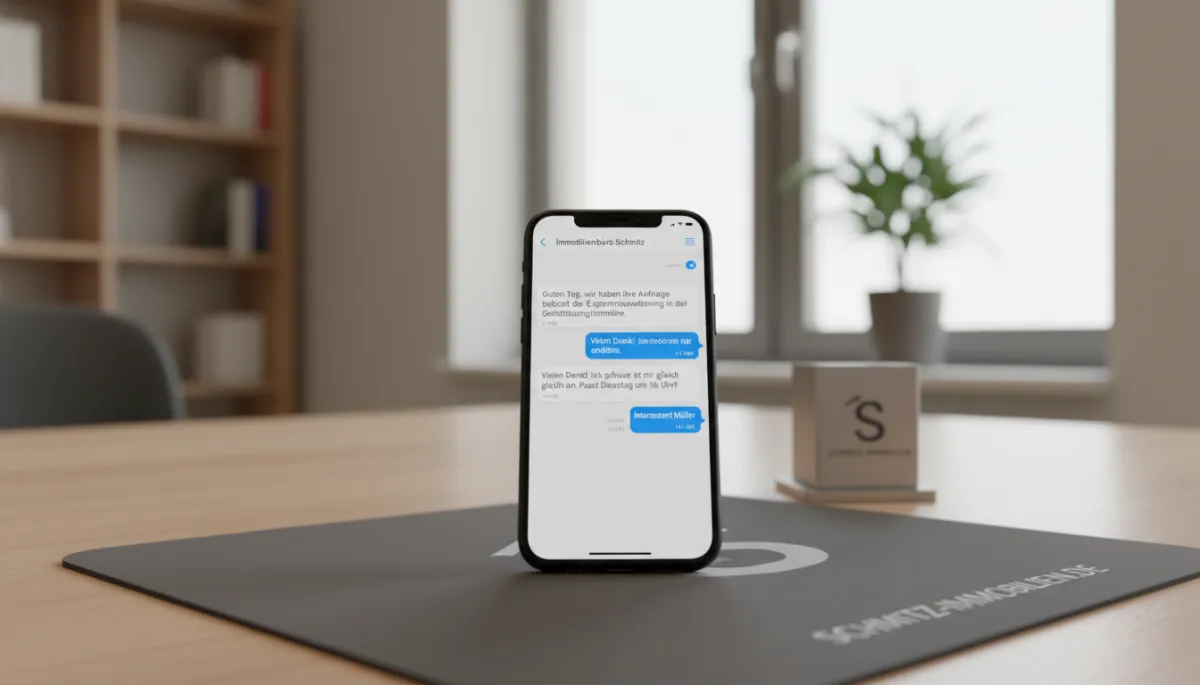
Close-up of a smartphone in a real estate office, screen showing a WhatsApp conversation in...
How to Start Multilingual Marketing Without a Full Translation Team
Many agencies hesitate because they imagine multilingual real estate marketing requires an in-house team of translators, copywriters, and bilingual agents. In 2026, that assumption is outdated. AI localization, modular workflows, and specialized partners make it possible to launch credible multilingual funnels in weeks, not years.
1. Prioritize your top two buyer languages
Start with data, not assumptions. Look at recent inquiries, portal analytics, and social media stats to identify where international interest already exists. For most European-focused players, that short list will include Dutch, German, French, Arabic, or Russian. Choose one or two languages where you see both demand and strategic fit.
2. Build language-specific funnels, not random translations
For each priority language, design a simple, end-to-end journey:
Campaigns in that language on Meta, Google, or specialized housing ad networks.
Landing pages with localized headlines, bullet points, and forms.
WhatsApp entry points and autoresponders in the same language.
Lead-routing rules so the right person or partner handles follow-up.
This is where native-language ads converting better than English-only campaigns becomes a practical framework rather than a theoretical claim. You are not “adding languages” — you are building focused, language-specific revenue engines.
3. Use AI for first drafts, humans for nuance
AI translation and localization tools are now strong enough to handle first-pass drafts of property descriptions, ad copy, and WhatsApp templates. The winning model is simple: let AI do 70–80% of the work, then have a native speaker — freelancer, partner agent, or bilingual team member — refine tone, fix cultural missteps, and adjust terminology.
This hybrid approach keeps costs manageable while protecting your brand. It also allows you to iterate quickly as you learn what resonates with each language segment.
4. Standardize reusable multilingual assets
To avoid chaos, create a library of multilingual building blocks:
Core brand messages and value propositions in each language.
Reusable WhatsApp quick replies for viewing requests, documentation, and next steps.
Standard FAQs and process explanations adapted for each buyer group.
Localized call-to-action phrases and compliance disclaimers.
Once these assets exist, launching a new campaign or listing in Dutch or Arabic becomes a matter of assembly, not reinvention.
5. Measure performance by language and refine
Finally, treat each language as its own market. Tag campaigns, leads, and deals by language so you can see which segments deliver the highest conversion and lifetime value. You will often find that a smaller language segment — for example, high-intent German retirees or Arabic-speaking family investors — outperforms larger, more generic English audiences.
Use those insights to reallocate budget, deepen localization, and, when justified, expand to additional languages.
Conclusion: Multilingual Is the Infrastructure of Modern International Real Estate
In mid-2026, the question is no longer whether multilingual real estate marketing works. The data, buyer behavior, and platform evolution all point in the same direction. Native-language experiences outperform English-only campaigns on engagement, cost per lead, and, most importantly, trust.
For international agents, developers, and marketers, the real question is speed: how quickly can you move from ad hoc translation to structured, multilingual growth engines? Those who act now — prioritizing Dutch, German, French, Arabic, and Russian where relevant, integrating WhatsApp, and leveraging AI plus human review — will set the standard for cross-border property experiences. Those who delay will find themselves competing on price against brands that already speak their buyers’ language.

Indoor real estate fair scene with a diverse group of international buyers from different...
FAQ: Multilingual Real Estate Marketing in Practice
1. Is English really no longer enough for international buyers?
English remains important, but it is no longer sufficient as your only language. Buyers use English to compare options, but they make decisions faster when information, conversations, and reassurance are in their native language. In competitive destinations, agents offering full native-language journeys consistently win market share from English-only competitors.
2. Which languages should my agency prioritize first?
Start with where your demand already exists. For European-focused businesses, Dutch, German, French, Arabic, and Russian are high-value bets, alongside English. Analyze your portal traffic, inquiry emails, and social media audiences to see which nationalities and languages are most active — then build dedicated funnels for the top one or two.
3. How much of my funnel needs to be localized?
The more consistent the journey, the better the results. At minimum, localize your ads, landing pages, and first-touch WhatsApp or email responses. Ideally, extend localization to FAQs, process explanations, and key documentation summaries. Full contract translation is not always required, but clear guidance in the buyer’s language is.
4. Can small agencies realistically manage multiple languages?
Yes — if you design for scale from the start. Use AI tools to draft content, then rely on freelance native speakers or partner agents to refine it. Create reusable libraries of multilingual messages and WhatsApp templates. Focus on one or two languages where you see the strongest ROI rather than trying to cover the entire world at once.
5. How quickly can multilingual campaigns start generating results?
With the right tools and partners, you can launch your first language-specific funnel in a few weeks. Many agencies see improved click-through rates and lower cost per lead as soon as they switch from generic English campaigns to native-language ads with aligned landing pages and WhatsApp flows. The compounding effect comes from continuous optimization — testing messages, refining targeting, and expanding what works to additional properties and markets.


