
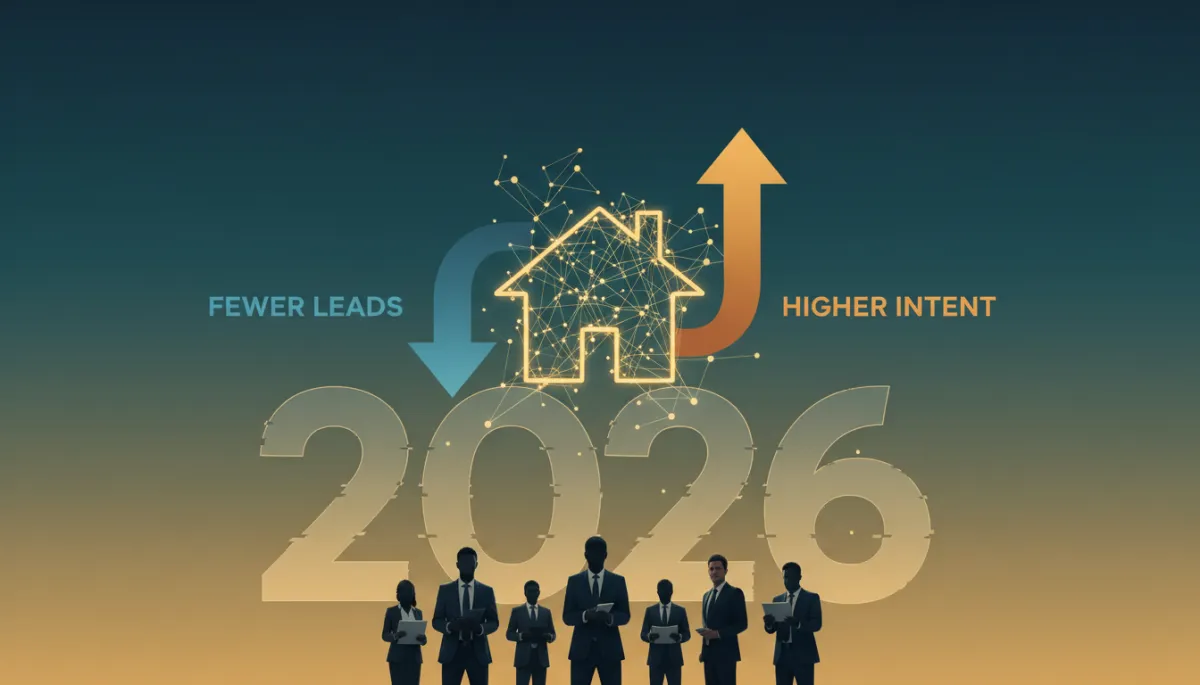
2026 Real Estate Trends: High Intent Leads
Real Estate, High Intent Leads, 2026 Trends
2026 Trend: Fewer Leads, Higher Intent — What Real Estate Agents Must Do Now
As a quantitative trader turned real estate analyst, I watch markets through one lens — conversion efficiency. In 2026, global real estate is shifting in a way every serious agent and developer must understand: you are receiving fewer leads, but the average buyer is more financially prepared, better informed, and closer to a decision than at any point in the last decade.
This is not a temporary glitch in your CRM. It is a structural change driven by technology, tighter economic conditions, and more sophisticated buyers. If you keep playing the old “more leads, more ads, more noise” game, your ROI will deteriorate. If you pivot to a high-intent, high-conversion model, your margins can actually improve in a lower-volume environment.
Fewer Leads, Higher Intent in 2026
Online portals and AI filters mean fewer, more decision-ready inquiries — volume down, intent up.
Quality now beats quantity — top agents convert 3–5x better by focusing on serious prospects.
WhatsApp, SMS, and structured follow-up systems outperform traditional email-heavy nurturing.
Automation and AI qualification tools free you to spend time in live conversations, not data entry.
Agents who master high-intent lead handling will gain market share even as overall demand softens.
1. The 2026 Reality — Less Noise, More Signal
In trading, when liquidity thins but order quality improves, we adjust our execution strategy — fewer trades, larger size, tighter risk controls. Real estate in 2026 is experiencing a comparable regime shift.
Major portals are filtering aggressively. Zillow’s lead authentication and guided search tools, for example, are engineered to surface “decision-ready” renters and buyers, not casual browsers. Their partners report higher response rates and better ROI from fewer leads — an explicit move toward quality over volume.
Economic conditions are also doing part of the filtering. With rates, affordability, and regulatory changes squeezing speculative demand, the people still actively searching — especially international buyers — are typically:
Pre-approved or holding cash,
Clear on budget, location, and timeframe,
Using data, AI tools, and expert content to self-educate before contacting you.
From a numbers perspective, think of it this way: your top-of-funnel impressions may be flat or rising, total inquiries may be down 20–40%, but lead-to-close conversion can realistically double if you treat each serious inquiry like a high-conviction trade.
2. Why Quality Now Beats Quantity — A Conversion Math View
Most agents still benchmark success by “leads per month.” That’s like a fund manager bragging about number of trades instead of risk-adjusted return. In 2026, the only metric that matters is conversion efficiency — how effectively you convert high-intent real estate leads into signed contracts.
Industry benchmarks show online lead-to-close conversion typically between 0.4% and 1.2%. Top performers with disciplined nurturing, automation, and strong follow-up reach 5% or more. That is a 4–10x improvement without increasing lead volume.
ScenarioMonthly LeadsConversion RateClosings / MonthOld model — high volume, low quality4000.8%3.22026 model — fewer leads 2026, higher intent1603.5%5.6
You close more deals from less volume — and your operational cost per closing falls because your team is no longer wasting hours on unqualified inquiries. For international developers selling off-plan units or luxury inventory, this shift is even more pronounced: a handful of serious global buyers can move millions in stock.
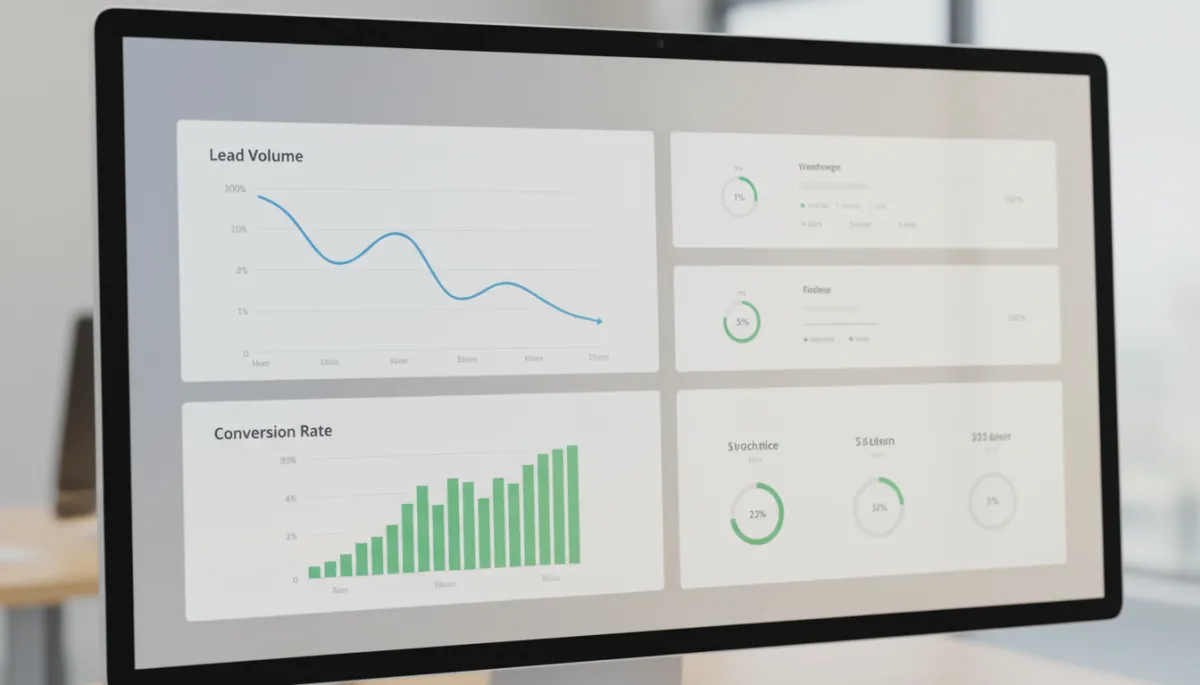
-toned close-up of a computer monitor showing a clean analytics dashboard with a line chart of...
Key drivers of higher real estate lead quality
Portals and CRMs adding verification and pre-qualification steps.
Transparent ads that include realistic pricing and buyer requirements, filtering out non-serious traffic.
Buyers using AI search and content to self-screen before they ever hit your WhatsApp.
The conclusion is clear: chasing more raw leads is now a negative expected-value strategy. Optimizing how you convert real estate leads you already receive is where the edge lies.
3. Reading Buyer Intent Like an Order Book
In markets, we read depth, speed, and size of orders to infer intent. In real estate, intent signals are embedded in behavior — what buyers click, ask, and share. AI and analytics make these signals more visible in 2026, but you still need to interpret them like a professional.
High-intent signals you can’t afford to ignore
Specificity of request — “3BR villa in District One, budget 6–7M AED, need to move in 6 months” is a high-intent profile. Generic “send me options” is not.
Engagement depth — multiple virtual tour views, saving listings, downloading brochures, or requesting mortgage simulations.
Channel choice — buyers who move the conversation to WhatsApp or phone quickly are usually closer to execution than those who stay in email.
Documentation readiness — proof of funds, pre-approval letters, or corporate structures already prepared for international purchases.
Timeframe clarity — “buying in the next 90 days” beats “maybe this year” every time.
AI systems can score these inputs, but buyers are increasingly skeptical of “black box” automation. Studies show many are willing to pay more for human verification of AI outputs. Your competitive edge is combining machine-scored signals with human judgment — just like a trader overlays quantitative models with discretionary insight.

International couple sitting on a -toned sofa at home in the evening, both focused on a tablet...
4. How Agents Must Adapt — From Lead Farming to Portfolio Management
Think of your pipeline like a portfolio of positions, not a pile of random tickets. Each high-intent real estate lead has an expected value and probability of closing. Your job is to allocate time and attention where the risk–reward is best.
Step 1 — Segment your book into tiers
Tier 1 — Hot (execution phase): Verified budget, clear location, defined timeframe under 90 days, responsive on WhatsApp. Treat them like open positions you are actively managing.
Tier 2 — Warm (accumulation phase): Good fit but 3–12 months out, or still refining location and budget. They need structured nurturing, not pressure.
Tier 3 — Watchlist: Early-stage, vague, or testing the market. Keep low-effort, automated touchpoints only.
Stop giving equal time to all three tiers. In trading terms, you are over-hedging noise and under-sizing conviction trades.
Step 2 — Redesign your follow-up system for high intent
Most agents lose serious buyers not because of price or product, but because their follow-up systems for serious buyers are inconsistent. In 2026, you need a rules-based follow-up “strategy” the way a trader needs a defined entry and exit plan.
Example playbook for a Tier 1 lead (execution strategy):
Entry signal: Detailed inquiry + budget + timeframe < 90 days + fast reply to first message.
Day 0: Reply within 10–30 minutes, move conversation to WhatsApp, confirm criteria, propose 1–2 precise options.
Day 1–3: Share tailored video walkthroughs or voice notes, answer financing questions, book a call or viewing.
Day 4–10: Alternate WhatsApp messages and short calls, refine shortlist, introduce mortgage or legal partners if international.
Exit condition: No response to three consecutive follow-ups across channels — downgrade to Tier 2 and move to lower-intensity nurture.
You are not “chasing” — you are executing a disciplined playbook on a high-probability position.
5. Tools and Strategies for Working High-Intent Leads
Technology should reduce friction, not add noise. The right stack for 2026 is lean, automated where it matters, and centered on live human conversations.
Core tools for high-intent pipelines
CRM with lead scoring — Score leads based on budget, timeframe, engagement, and response speed. Automatically tag Tier 1, 2, and 3 so your day starts with the highest-value conversations.
WhatsApp and SMS automation — With SMS open rates near 98% and far higher response than email, your initial and follow-up touchpoints should be mobile-first, especially for international buyers in different time zones.
AI chat and qualification forms — Use smart forms and chatbots on landing pages to capture key data (budget, location, purpose, timeframe) before the lead hits your phone. Modern AI tools for qualifying or converting leads can handle routine questions 24/7 and escalate only serious prospects.
Analytics dashboards — Track source-level performance: which campaigns or portals send high-intent leads with the best conversion, not just the most clicks.
Lead-generation strategies optimized for intent
Your marketing should actively filter, not just attract. That means:
Transparent ad copy — Include price ranges, required equity, buyer profile (investor vs end-user), and realistic timelines. You will get fewer clicks but more qualified inquiries.
Hyper-local and niche content — Guides on yields in specific districts, visa rules for particular nationalities, or tax implications of cross-border purchases. These attract buyers who are already deep in research mode.
Referral and repeat systems — Data from 2026 shows that referrals and repeat clients still drive the majority of agent business. Build structured referral programs and post-transaction nurturing sequences.
Market-specific funnels — For hubs like Dubai, pair your campaigns with specialized real estate lead generation strategies that already prioritize investor intent, not tourist curiosity.
The aim is simple: fewer, better inbound leads that match your inventory and your expertise.
6. Execution Discipline — Treat Every Serious Lead Like Capital
In trading, we size positions based on conviction and risk. In real estate, your “capital” is time and attention. In a world of fewer but higher-intent leads, misallocating that capital is the fastest way to fall behind.
Build daily routines around your highest-value activities:
Morning session — Review new Tier 1 and Tier 2 leads, send personalized WhatsApp messages or voice notes, book calls.
Midday session — Conduct calls, virtual tours, and negotiations. Focus on moving deals one step closer to signature.
Afternoon session — Review analytics, adjust campaigns, refine your qualification forms, and update your pipeline tiers.
Your KPI set should evolve as well. Track:
Response time to new Tier 1 leads.
WhatsApp reply rate within 24 hours.
Lead-to-meeting and meeting-to-offer conversion.
Overall lead-to-close conversion per channel.
These are the real equivalents of P&L, Sharpe ratio, and drawdown in your agency business.

Bright exterior of a modern luxury property colors, real estate agent in a suit shaking hands...
7. Conclusion — The Agents Who Win in 2026
The 2026 market rewards precision, not volume. Platforms are filtering harder, buyers are more informed, and economic conditions are weeding out casual shoppers. The result is clear: fewer leads, higher intent — and a rare opportunity for disciplined agents and developers to increase profitability.
If you adapt now — by segmenting your pipeline, tightening your follow-up, leveraging automation intelligently, and focusing on high-intent real estate leads — you can grow even as headline transaction volumes fluctuate. Ignore the shift, and you will spend the next cycle outbid not on price, but on professionalism.
In trading, regime changes create winners and losers. In real estate 2026, the winners will be those who treat every serious inquiry like a carefully selected position — and manage it with the rigor of a financial portfolio.
FAQ — High-Intent Real Estate Leads in 2026
1. Why am I getting fewer leads in 2026 compared with previous years?
Lead volume is falling because portals, ad platforms, and your own filters are doing more pre-qualification. Economic pressure also discourages casual inquiries. The upside is that the people still reaching you are generally more serious, better funded, and closer to making a decision.
2. How can I tell if a lead is truly high intent?
Look for specificity (clear budget, area, and timeframe), fast responses on WhatsApp or SMS, evidence of financing preparation, and engagement with detailed content such as floor plans, yield reports, or legal guides. Combining these signals with basic AI scoring in your CRM gives you a reliable picture of intent.
3. What is the best communication channel for converting real estate leads?
WhatsApp and SMS consistently outperform email in open and response rates, especially with international buyers. Use email for documents and summaries, but move serious conversations to mobile quickly. Short, personalized voice notes and videos often convert better than long text messages.
4. Which marketing strategies work best in a high-intent environment?
Focus on transparent, educational campaigns that attract decision-ready buyers — detailed landing pages, hyper-local content, and clear pricing. Combine this with structured referral programs and market-specific funnels, such as specialized real estate lead generation strategies for your key markets.
5. How should I adjust my KPIs for 2026 and beyond?
Shift from counting raw leads to tracking conversion metrics: response time to hot leads, WhatsApp reply rates, meeting-to-offer ratios, and overall lead-to-close conversion by channel. These numbers tell you how efficiently you convert real estate leads, which is the real edge in a fewer-leads, higher-intent world.


