
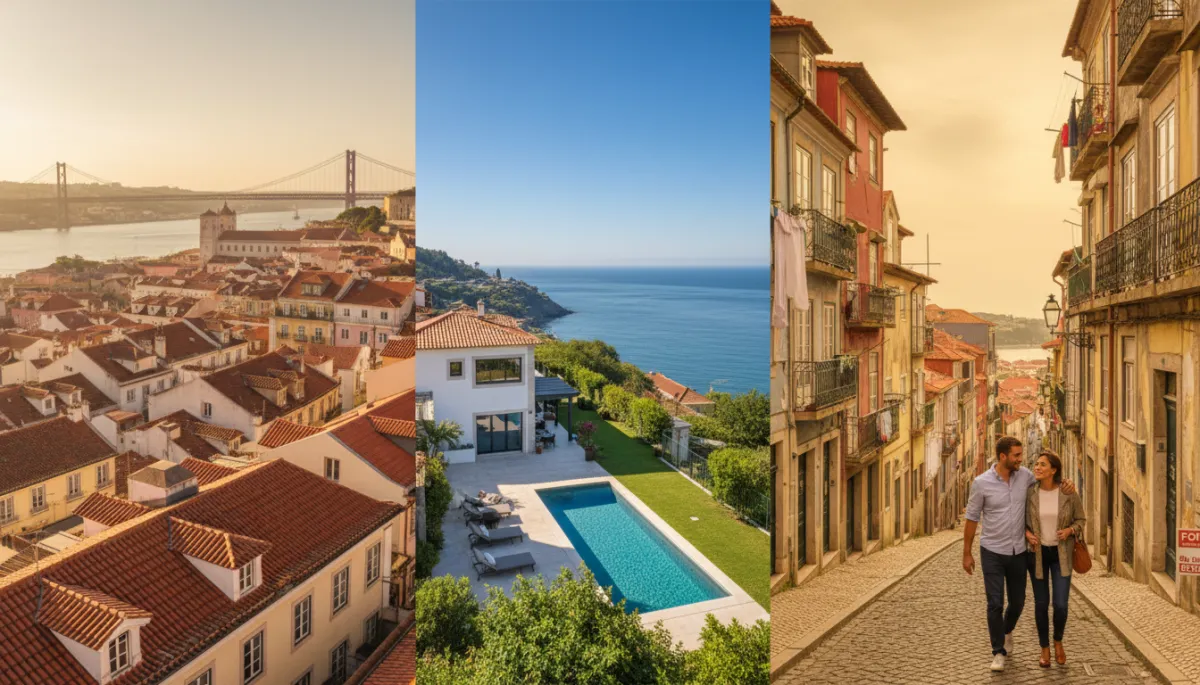
2026 Portugal Real Estate Insights for Buyers
2026 Market Snapshot — Portugal: What International Property Buyers Need to Know
Portugal real estate 2026 remains one of Europe’s most closely watched markets. Strong price growth, a maturing policy framework, and sustained foreign demand are reshaping how international buyers approach Lisbon, Porto, the Algarve, and the Silver Coast. This snapshot outlines the key data, visa and tax updates, and practical considerations investors and agents need to understand this year.
2026 Portugal real estate market at a glance
Prices remain high and are still rising, but at a slower pace than 2023–2025.
Lisbon and Porto lead on capital values, while Algarve and Silver Coast balance lifestyle and yield.
The classic NHR regime is closed to new applicants; alternatives and grandfathered cases remain.
D7 (passive income) and D8 (digital nomad) visas continue to drive mid-to-long-term residency demand.
British, Dutch, German, American, and Brazilian buyers are shaping local submarkets and negotiation dynamics.
1. Portugal Real Estate 2026: Market Overview for International Buyers
By mid‑2026, Portugal has firmly transitioned from “emerging hotspot” to “consolidating prime market.” The OECD housing index shows prices more than doubling between 2015 and 2025, with an increase of around 106 percent, far above many peer economies. In 2025 alone, the national house price index rose by 17.6 percent year-on-year, the strongest annual jump in the series.
In early 2026, the national average price reached roughly €3,262 per square meter, while Lisbon climbed close to €5,900 per square meter. Survey data from RICS and Confidencial Imobiliário indicate that price expectations remain positive, but growth is beginning to moderate. Net balances for price increases are still comfortably above zero, yet forward expectations have eased, signaling a more stable but still upward trajectory.
For international buyers, this means competition remains intense, especially below €600,000, but the frenzied bidding wars of the early post‑pandemic years are less common. Investors should expect firm seller expectations, limited room for aggressive discounts, and strong demand for well‑located, turnkey assets.
2. Key Locations: Lisbon, Porto, Algarve, and the Silver Coast
Lisbon: Prime capital and core investment market
Lisbon continues to anchor Portugal real estate 2026. Prime central districts such as Chiado, Príncipe Real, and Avenida da Liberdade remain expensive and supply constrained. New-build and refurbished stock is often positioned at the top of the market, targeting affluent international buyers and corporate tenants.
Price growth in Lisbon has slowed from the double‑digit surges of 2022–2024 but remains positive. The city’s fundamentals are underpinned by a diversified economy, tech and startup activity, and strong tourism. For investors, the most compelling opportunities now often lie in:
Emerging neighborhoods on the periphery of the historic core, where infrastructure and amenities are improving.
Renovation projects in older buildings, provided licensing and structural due diligence are handled carefully.
Medium‑term furnished rentals to professionals and digital nomads, rather than short‑stay tourist models that face tighter regulation.
Porto: Lifestyle city with growing international appeal
Porto has evolved from a “value alternative” to a destination in its own right for international buyers in Portugal. Districts around Foz do Douro, Boavista, and the historic center attract both lifestyle buyers and investors targeting long‑term rentals.
Price levels remain below Lisbon but have risen rapidly. RICS data show Porto’s price expectations close to Lisbon’s, reflecting strong demand and limited central supply. For investors, Porto offers:
Lower entry prices than Lisbon for comparable urban character.
Resilient demand from students, professionals, and domestic tenants.
Potential upside in regenerated riverfront and warehouse districts.
Algarve: Resort and retirement powerhouse
Algarve property investment remains a core theme in 2026. Prime coastal areas such as Quinta do Lago, Vale do Lobo, and Vilamoura command high prices, driven by second‑home buyers and retirees from the UK, Germany, the Netherlands, and increasingly the US.
While ultra‑prime villas and golf properties can exceed €10,000 per square meter, there is still strong demand in the €500,000 to €1.5 million band, especially for modern villas with pools and sea views. Rental yields are supported by a robust tourism sector, although investors must factor in seasonal patterns and evolving local regulations on short‑term rentals.
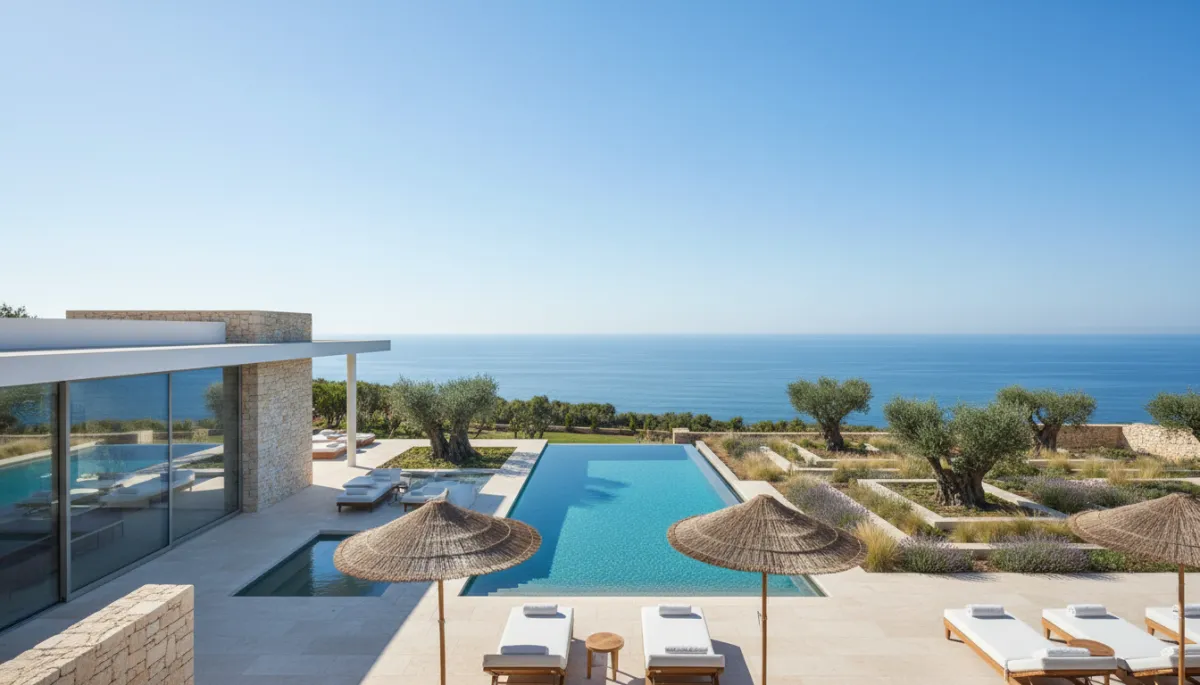
Luxury Algarve villa with private pool, manicured garden, and Atlantic Ocean view on a sunny day.
Silver Coast: Relative value and emerging lifestyle destination
The Silver Coast, stretching from north of Lisbon toward Coimbra, has gained visibility among international buyers seeking more space and lower prices. Towns such as Nazaré, Peniche, Óbidos, and Figueira da Foz offer ocean views, surf culture, and a more local feel compared with the Algarve.
Prices per square meter are typically below Lisbon and the Algarve, but the gap is narrowing. Investors focused on long‑term capital appreciation and lifestyle use may find attractive opportunities in new developments and renovated village houses, particularly where infrastructure and digital connectivity are improving.
3. Price Trends, Supply, and Affordability in 2026
The 2026 Portugal real estate market is defined by a combination of strong demand and constrained supply. Affordable listings are becoming scarce: properties under €300,000 have fallen sharply as a share of the market, dropping from around 42 percent to roughly 36 percent in just one year. The steepest declines are in the €90,000–€210,000 band, where some sub‑segments have seen supply drop by more than 200 percent.
Demand, however, remains strongest in exactly these price brackets. Listings under €300,000 receive the highest number of contacts per property, often averaging double‑digit inquiries. Mid‑range homes between €300,000 and €600,000 are also seeing increased demand, with year‑on‑year growth in buyer interest of up to 35–48 percent.
For international buyers, these dynamics have several practical implications:
Properties up to €600,000 tend to move quickly, often within 80–90 days on the market.
Above €600,000, negotiation windows are typically longer, and days on market extend to four months or more.
Buyers seeking financing should secure pre‑approval early, as local banks remain cautious on loan‑to‑value ratios and documentation for foreign income.
Affordability for local households has worsened as price growth has outpaced income growth. While lower ECB rates since 2024 have eased some pressure on mortgage payments, the overall effort rate is still inching higher. This structural tension between affordability and demand is one reason policymakers are prioritizing new housing supply and rental market reforms.
4. NHR Tax Regime Update: What Still Matters in 2026
For many years, the Non‑Habitual Resident (NHR) regime was a central pillar of the international buyers Portugal story. That framework has now changed significantly.
The classic NHR regime was officially closed to new applicants from January 1, 2024. Individuals who were already registered as NHR by that date retain their benefits for the remainder of their original 10‑year period. A transitional window allowed certain new residents who arrived by the end of 2024, and who met specific documentation criteria, to apply until March 31, 2025. Applications after that date are still possible in some cases but reduce the total number of benefiting years.
As of 2026, there is no new path into the old NHR regime for fresh entrants. Instead, Portugal has introduced a more targeted incentive: a 50 percent exclusion from Portuguese taxation on employment or professional income for qualifying new residents who become tax resident in 2024, 2025, or 2026 and had not been resident in the previous five years. This benefit does not apply to those who applied for NHR.
For property investors, the key takeaways are:
Existing NHR beneficiaries can still leverage favorable treatment on certain foreign income streams, which can support higher net yields and overall returns.
New arrivals must structure their income, ownership, and residency plans based on the standard Portuguese tax rules plus the newer 50 percent exclusion where applicable.
Professional tax advice is essential, especially where rental income, company structures, and cross‑border pensions intersect.
5. D7 and D8 Visas: Residency Pathways Driving Demand
Even without new NHR registrations, Portugal remains attractive thanks to its residency visas. The D7 and D8 visas are particularly relevant for international buyers considering medium‑ to long‑term stays.
D7 visa: Passive income and retirement‑oriented buyers
The D7 visa targets non‑EU citizens who can demonstrate stable passive income. In 2026, the baseline requirement is linked to the national minimum wage, currently around €920 per month, or €11,040 per year, for a single applicant. Spouses and children increase the required income by 50 percent and 30 percent respectively.
Qualifying income typically includes pensions, rental income, dividends, and other non‑employment sources. Applicants must provide evidence of income, a Portuguese tax number, a local bank account, health insurance, and a clean criminal record. Processing times are still variable, with consular stages often taking around two months and residency card issuance via AIMA extending over several additional months.
For real estate, D7 applicants often prioritize:
Primary homes or long‑term rentals in quieter neighborhoods of Lisbon and Porto, or in coastal towns.
Properties with good year‑round livability rather than purely holiday‑oriented layouts.
Moderate budgets that still meet comfort and accessibility standards, often in the €250,000–€600,000 range.
D8 visa: Digital nomads and remote professionals
The D8 digital nomad visa is aimed at remote workers and freelancers whose income comes from foreign employers or clients. In 2026, applicants must show monthly income of at least four times the minimum wage, roughly €3,680 per month.
Documentation includes proof of remote work contracts or invoices, accommodation in Portugal, health insurance, and a clean criminal background check. Applicants can choose between a temporary‑stay version (up to one year) and a residence‑track version that leads to a two‑year permit and, ultimately, eligibility for permanent residence and citizenship.
From a property perspective, D8 holders often favor:
Well‑connected urban neighborhoods with strong internet and coworking spaces.
Furnished apartments suitable for flexible stays and hybrid usage.
Locations that balance lifestyle and cost, such as secondary Lisbon districts, central Porto, or parts of the Silver Coast.

International couple walking through a traditional Portuguese cobblestone street lined...
6. Golden Visa Legacy: How It Still Shapes the Market
Portugal’s golden visa program, once a major driver of international capital into Lisbon and coastal hotspots, has been significantly scaled back. Real estate investment routes have been curtailed or redirected, with policymakers seeking to shift focus toward productive investment and reduce pressure on urban housing.
However, the legacy of the golden visa era remains visible in several ways:
Stock built or renovated specifically for golden visa buyers, especially in Lisbon and Porto, continues to circulate in the resale market.
Some projects originally designed for golden visa investors have repositioned toward lifestyle buyers and long‑term rentals, often with high design standards and premium amenities.
Investors from golden visa source markets—such as China, Brazil, and parts of the Middle East—have built familiarity with Portugal and, in some cases, continue to invest through alternative routes or direct purchases without residency incentives.
For today’s buyers, the golden visa legacy means there is a cohort of relatively new, high‑spec apartments and small‑scale developments that may offer predictable quality but sometimes compressed yields due to high entry prices. Careful underwriting of rental demand, service charges, and resale potential is essential.
7. Who Is Buying? Key International Segments in 2026
International buyers remain central to Portugal real estate 2026, especially in coastal and urban hotspots. Among the most active nationalities are:
British buyers who continue to favor the Algarve and parts of the Silver Coast for retirement and second homes, often with a long relationship to Portugal pre‑dating Brexit.
Dutch buyers increasingly visible in both Algarve and Lisbon, often seeking sustainable new‑builds and family‑oriented properties. This mirrors broader trends seen in analyses of Dutch buyers in Portugal and other European buyer segments.
German buyers focusing on high‑quality construction, energy efficiency, and stable long‑term use, with a strong presence in the Algarve and northern coastal areas.
American buyers who have discovered Portugal as a lifestyle and diversification play, often targeting Lisbon, Cascais, Porto, and upscale Algarve resorts, with budgets that can stretch local price norms.
Brazilian buyers who benefit from language ties and cultural familiarity, active across Lisbon, Porto, and key coastal towns, often combining lifestyle, education, and business motives.
For agents and developers, tailoring communication and service models to these segments is critical. Strategies such as reaching international buyers with native-language campaigns and structured WhatsApp follow-up with international property buyers can materially improve conversion rates and client satisfaction.
8. Investment Outlook: 2026 and Beyond
Looking ahead, the consensus among major research houses is that Portugal is entering a phase of consolidation rather than another explosive boom. JLL and other analysts highlight a stable macro environment, gradual interest‑rate normalization, and persistent demand against tight supply. CBRE projects around €2.4 billion in real estate investment for 2026, only slightly below 2025 levels, suggesting that capital remains committed to the market.
Key themes for investors include:
Quality over speculation. Projects with strong fundamentals—location, build quality, energy performance, and authentic local integration—are expected to outperform generic stock.
Rental market professionalization. Build‑to‑rent initiatives, institutional rental platforms, and tax incentives for affordable supply will gradually reshape opportunities for yield‑focused investors.
Policy and regulation. Continued attention to affordability and supply means more regulation is likely around short‑term rentals, licensing, and taxation. Investors should build conservative assumptions and monitor policy developments closely.
Regional diversification. While Lisbon and the Algarve remain anchors, Porto and the Silver Coast are increasingly important for balancing yield, entry price, and lifestyle appeal.
For international buyers and agents, the practical conclusion is clear: Portugal in 2026 is no longer a “cheap secret,” but it remains a compelling, relatively low‑risk market within the eurozone. Success now depends less on finding under‑the‑radar bargains and more on disciplined asset selection, careful tax and visa planning, and professional on‑the‑ground execution.

View of Porto riverside Ribeira district with colourful buildings and Douro river on a sunny day.
FAQ: Portugal Real Estate 2026 for International Buyers
1. Is Portugal still a good investment in 2026 despite high prices?
Yes, but expectations should be realistic. Prices are elevated after a decade of strong growth, and double‑digit annual appreciation is less likely going forward. However, fundamentals remain solid: limited supply, ongoing international demand, and a stable macro backdrop. Investors who focus on quality locations, realistic rental assumptions, and long‑term holding periods can still achieve attractive risk‑adjusted returns.
2. Which areas offer the best balance of lifestyle and yield?
Lisbon and Porto provide the deepest rental markets and the most diversified economies, supporting medium‑ to long‑term rentals. The Algarve delivers strong lifestyle appeal and seasonal rental potential, especially in prime resorts, though yields can be more volatile across the year. The Silver Coast often offers lower entry prices and emerging tourism and remote‑work demand, making it interesting for buyers willing to accept a less mature market in exchange for potential upside.
3. Can new foreign residents still benefit from the NHR regime?
New entrants in 2026 cannot access the classic NHR regime unless they fall under very narrow transitional rules linked to residence in 2024 and earlier documentation. Most new residents must plan under the standard tax system, potentially combined with the newer 50 percent exclusion on employment or professional income if they qualify. Existing NHR holders retain their benefits for the remainder of their 10‑year term, which can still be a significant advantage for those already in the system.
4. How do D7 and D8 visas influence property choices?
D7 applicants often prioritize stable, comfortable homes suitable for year‑round living, with budgets aligned to passive income levels. D8 digital nomads may opt for flexible, well‑located apartments with strong connectivity and access to coworking spaces. Both groups tend to favor properties that can function as both primary residences and income‑generating assets, which supports demand in central neighborhoods and well‑connected coastal towns.
5. What should international buyers watch most closely in the next 12–24 months?
Key factors include any new housing and rental regulations at municipal or national level, the speed at which new supply from initiatives like reduced VAT actually reaches the market, and broader eurozone interest‑rate trends. Buyers should also monitor local political debates around affordability, as these can affect short‑term rental rules, taxation, and planning. Working with experienced local advisors, staying informed, and stress‑testing investment cases against more conservative scenarios will be crucial to navigating Portugal real estate 2026 and beyond.


